[syndicated profile] scalziwhatever_feed

Posted by John Scalzi

The one problem I have with Roxanne is, alas, its central premise: that its protagonist, Charlie “C.D.” Bales (Steve Martin) is tragically undesirable because of his unusually long nose. C.D. is a pillar of the community with a steady and useful job, is well-read and cultured, empathetic and funny, kind to all, loved by his many friends and neighbors, and he owns a house. A nice one! In a town where the property values are clearly outrageous! That he is undatable because of his nose stretches credulity, not only back in 1987, when this film was made, but especially here in 2025, where a single, available, gainfully-employed and psychologically-undamaged middle-aged man would be snatched right off the sidewalk in front of his absolutely ridiculously cozy and well-appointed home. You can’t tell me otherwise. He’s the whole package. With a little extra!

Be that as it may, we are asked to accept that this updating of Cyrano de Bergerac is not lying to us, and that C.D., despite all this other advantages, is admired but lonely. This being the 1980s, not the 1640s when the original tale was set, we are told that C.D. has a serious, possibly deadly, allergic reaction to anesthesia, a fact which has put him into a coma before. This is great for patching up an obvious plot hole, but does mean it must suck for him to have regular dental care. C.D. is trapped with his nose, and seems resigned to it and tries to live with it with some amount of acceptance… unless someone tries to use it to make fun of him.

Then! Roxanne! For every Cyrano must have a Roxanne, even if the number of “n”s in her name is variable. This Roxane is Roxanne Kowalski, an astronomer who has come to C.D.’s ski town of Nelson (and actually shot in a ski town called Nelson, but in Canada, not the USA, where this film takes place). She’s in town for the clear skies to help her locate a comet. C.D. takes a shine to her, not only because she looks like Daryl Hannah, but because she’s smart, and is the only person in town besides him to traffic in sarcasm. The townsfolk of Nelson are lovely, but wit and wordplay are not exactly their thing.

Now arrives Chris (Rick Rossovich), the deeply hunky and handsome professional firefighter that Fire Chief C.D. brings into town to help train his hapless volunteer crew. Chris and Roxanne spy each other from across a crowded bar, she smiles and he… goes to hurl in the bathroom, because the idea of talking to women gives him a panic attack. Roxanne confesses her liking of Chris to C.D., who is crushed but wants her to be happy, intercedes on her behalf with Chris and, as the strictures of this tale require, starts feeding Chris the words that will woo Roxanne. Complications ensue, as they would.

I take it back, I have another problem with Roxanne, although this is with the tale of Cyrano in general, and a persistent feature across its many tellings. Which is that Roxanne, especially in this telling, where she is both a scientist and someone with social aptitude, would not be able to parse out the fact that Chris, who is a nice guy but mostly has well-marbled beef between his ears, is not the author of the letters and speeches that capture her sapiosexual heart. I mean, okay, I get it, horniness is a hell of a drug, but even so. The disconnect between Chris and “his” letters is a lot.

I’m willing to go with it because it means we get Steve Martin’s performance, which offers up a masterclass in having one’s heart break with a smile, and showing grace (up to a point) with people who offer none themselves. One of the highlights of the film, early-ish on, is when a boor in a bar calls C.D. “Big Nose.” Rather than take the bait, C.D. shows him up by offering a stack of much wittier insults the man could have offered. It takes skill, and guts, to humiliate someone by offering him all the better ways he could have humiliated you, and to do it in a whole bar full of people. It also takes skill to write the scene in a way that works. Martin, as the screenwriter, pulls it off.

This was the part of Martin’s career where he was doing smarter-than-average guys who held back heartbreak with melancholy humor. As a writer he’d follow up Roxanne a couple of years later with LA Story, another favorite of mine, where he played a similar character, albeit with a smaller nose, in a film with a somewhat more farcical tone. This is actually my favorite part of his career, when he became a somewhat improbably romantic leading man, and while it wouldn’t last, I enjoyed it while it did. I wasn’t the only one, as Martin found himself with a WGA award for Roxanne, in the category of adapted screenplay (I could have sworn he was also nominated for an Oscar for this script, and even wrote that down before doublechecking. He was robbed!).

The film centers on the character of C.D., and secondarily on the love triangle between him, Roxanne and Chris, but this film is also an ensemble film, and this ensemble nature is the one thing that I think elevates it, and gives the film lots of opportunities for grace notes and filling in of character. I’m telling you here that C.D. is well-loved by friends and neighbors, but the film simply shows it, unspooling fun little scenes that give you those details. This is another important point about C.D.’s character: He may be the only practitioner of sarcasm in Nelson, but he’s not cruel to, or bitter at, the rest of the town, which does not share his enthusiasm or facility for it. He is a good person, and worthy of love.

(And as the two other legs of the romantic triangle, Hannah and Rossovich are… fine! Hannah gets good lines and delivers them well. You can believe C.D. appreciates Roxanne’s whole package of person, not just the parts that look like a supermodel. Rossovich is also convincing as a lunk who is very good at his job and very bad at peopling. It’s important to note that Chris isn’t stupid — he knows what he knows and knows it well. One of the things he knows is that he’s not weapons-grade intelligent, like C.D. and Roxanne are. It’s also pretty clear he wouldn’t want to be.)

The original Cyrano de Bergerac (spoiler) does not exactly end on a happy note. Martin knows, as a writer and an actor, that his version is meant to be a romantic comedy, and so (spoiler) his version deviates from the original in significant ways. Martin is neither the first nor last filmmaker to have his adaptation swerve for the dictates of the market. He does it in a way that makes sense for the story he tells, and, importantly, gives agency for the resolution of the story to the right person. It ends well, even if Edmond Rostand, who wrote the original, might have notes.

For those who don’t know, Cyrano de Bergerac was an actual person, a noted soldier, raconteur and writer, who wrote some of the earliest work that could be identified as science fictional, including L’Autre Monde: ou les États et Empires de la Lune, published after his death. He did have a cousin Roxane, who married a Baron Christian of Neuvillette. There was no actual romantic triangle between the three of them. He did by all reports have a large nose, although probably not so large as the one attributed to him by both Rostand and Martin. It was unlikely that Cyrano’s nose kept him unavailable for amorous encounters; he was associated with noted libertines of his time.

See? I’m telling you this big nose thing is bunk!

— JS

glinda: local honestly (not a tourist)
[personal profile] glinda
It's the end of the year, and I’ve got time for one last album for this challenge.

In a year when it felt like everyone in my age bracket was obsessed with Oasis going back on tour, the equivalent band for me, Pulp, released a new album and went out on tour. (I was 11 going on 12 when I first heard Disco 2000, it was on a funny shaped sample CD that my dad got as a freebie somewhere, he brought it home, handed it to me and said ‘you’re going to love that one’ and I was hugely annoyed he was right. Different Class was the album that defined my teen years - it rewired something in my brain.) I’m mostly glad I didn’t try and get tickets after all, the surprisingly large number of clips of their Glasgow gig, were up in the gods of the Hydro which is realistically where I’d have ended up and overall if I couldn’t have been down on the floor, I was just as well just watching their ‘surprise’ Glastonbury gig. (It was the 30th anniversary of their classic Glasto performance when they were at the height of their fame.) I really loved both the singles they released from it - I was doing a lot of driving for work, and despite how much 6Music over played them both, I never got sick of either track - and the new bits I heard on the Glasto set so I fully intended to pick up a copy of the album - More. I just never got round to it, until the end of November when I was looking for a pick me up in HMV and spotted a ‘colour’ vinyl edition in the twofer deal - I got Air’s Moon Safari an album I’ve loved for years, but only ever had it ripped from an friend’s copy - and knew that was exactly what I needed.

(And because Pulp absolutely know their audience, particularly for the vinyl edition, there's an insert with both production details and all the lyrics - seriously bands underestimate how much added value having the lyrics provides. Also I got the 'green' vinyl addition and it's just a gorgeous shade of bottle green which makes a gorgeous contrast with the orange on the central label. Just nice simple design. When Jarvis and Candida from the band were interviewed by Jo Whiley after the Glastonbury gig, Candida noted that when they’d all got together to rehearse they’d felt excited to make music together again for the first time in ages and I think you can tell, it really feels like an album made by a band enjoying making music together. I mean they’ve been a band together for longer than my entire life, when they released their breakout album His and Hers in 1994 they’d been going for like 16 years! It’s nice to think they just get back together every so often because it’s still fun to make music together.)

It was a great choice. Got to Have Love and Spike Island are still clearly the stand out tracks - classic Pulp tracks - but listening to it on vinyl, just letting it play while I was doing other things was a great way to let the rest of the album soak into my brain. Tracks I’d probably have skipped over in digital format, or even just on CD for being a bit blah, have settled into my brain and become favourites. It’s such a middle-aged album and I love it, just listening to Jarvis’ wry dead-pan commentary on life and love, that mixture of cynicism and hopefulness that is their trademark, is soothing to me. The stripped back beauty of some tracks versus the lush production of tracks like The Hymn of the North an album that reminds me why I still love this band so much. I was going to pick out my favourite tracks to talk about - Grown ups and Background Noise - but the more I listen to the album the more I fall in love with it all the tracks. It’s not often that one of your favourite bands from your teens gets back together and makes one of their best albums - I’ve been lucky Skunk Anansie came back with a banger in the form of Black Traffic but that was 2013, I think, it doesn’t happen a lot - and I’m so glad they did.

Sunday Secrets

Dec. 28th, 2025 12:20 am
[syndicated profile] post_secret_feed
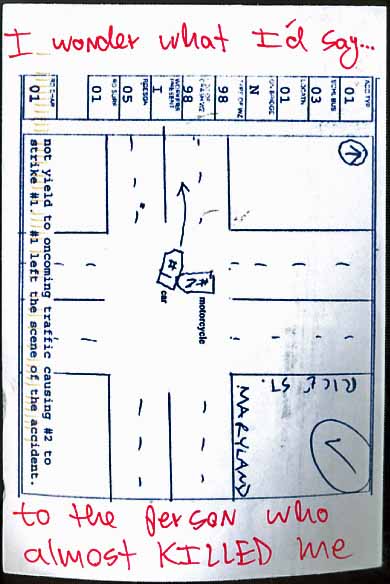
Posted by Frank

[on back] I knocked over the Christmas tree and blamed it on my cats.

See the secrets, read the stories, share your confession. Visit Now

The post Sunday Secrets appeared first on PostSecret.

[syndicated profile] scalziwhatever_feed

Posted by John Scalzi

Alita: Battle Angel is a $170 million dollar production from 2019 that feels and plays like modern CGI effects were superimposed on a cheap, janky science fiction film from 1985, the sort of $6 million, B-movie-level schlock that was put out at the time by Cannon Films or New World Cinema, two of the most notable “make ’em cheap, make our money in home video” studios of that era.

This sounds like an insult, I’m aware, and I’m not sure there’s an easy way to assure anyone that it’s not. I am not saying this film is prettied-up crap. I am saying it has a vibe, and the vibe is: the other movie you rent from a video store on a Friday night, once you’ve gotten the actual movie you came for from the “New Releases” shelf. You know, the one starring that TV actor whose series ended three years ago, and the Playmate of the Year from a decade back. The one that you had to decide between it and a Chuck Norris flick. That film. This is that film. It’s that film, on a whole lot of steroids and Muscle Milk. You can thank Robert Rodriguez for that. More on that in a second.

To call Alita a rehabbed 80s video store second pick is slightly anachronistic. The manga upon which based, in which an android warrior left on a junk heap searches for clues about her identity, debuted in 1990 and would eventually encompass nine volumes. It caught the attention of James Cameron, who apparently heard of it from Guillermo Del Toro(!). For a while Cameron was committed to directing it, but eventually picked another project instead, which would eventually become Avatar, a little indie film that struggled at first to find an audience but would eventually become a cult favorite. Cameron’s attention as a director was thus diverted, but he was still on board as a producer, and after some time another director was found: Robert Rodriguez.

Robert Rodriguez fascinates me a little because he is either a true cinematic polymath, or he’s a weird little control freak, or maybe he’s a little bit of both at the same time. He directs movies. He also writes them, which is not that unusual for a director to do. But then also edits them, acts as director of photography, operates the cameras, composes the scores, does production design, sound design and produces visual effects. It’s possible he acts as crafts services on his sets, too, I just haven’t found the IMDb listing for it.

Rodriguez rather famously got his start in film with El Mariachi, the 1992 action movie he made for just $7,000, if you don’t count the hundreds of thousands of dollars Columbia Pictures put into its post-production and the millions it spent marketing it. But hey, they were the ones to spend that money! Rodriguez himself only spent $7k! When the legend is more interesting than the facts, go with the legend.

No matter what, however, the movie was made for next to nothing, and Rodriguez wrote, directed, shot and edited the film, setting the tone for future projects. He worked fast and tight and lean, and in this, he absolutely resembled the filmmakers from the New World Cinema and Cannon Films eras, who were given not a lot of time and not a lot of money to get their films into the can and into theaters. Prior to Alita, only one of Rodriguez’s films had a budget over $50 million (Sin City: A Dame to Kill For, for $65 million), and nearly all of them made their production budgets back at the box office.

Is there a drawback to Rodriguez’s “fuck it, I’ll do it all myself” sort of sensibility? From a financial point of view, not really. From a creative presentation point of view… well, let’s just say Rodriguez does not lack for style, but you can feel when a corner is being cut, and he’s not always 100% percent in control of his film’s tone or his scripts. He’s mostly good, mostly fast, and mostly cheap, and also sometimes you get the feeling that along the way he says “good enough, print it” and moves on. If you’re a movie exec at a studio, you probably love this, because you know what? He’s probably right! And for what he spends on a movie, even when he’s not, you’re not out much. But that’s how you get the “second pick at the video store” vibe out a movie.

Which brings us back to Alita: Battle Angel. Rodriguez here is rather uncharacteristically credited only once, as director, but he also apparently did an uncredited pass on the script, paring it down from James Cameron’s original 180-page behemoth to something that could be watched without your bladder exploding before the third act (the final script is credited to Cameron and Laeta Kalogridis). The resulting script, however it was completed, is, charitably, disjointed. The progression Alita (Rosa Salazar) has from discarded android foundling to bounty hunter to rollerball athlete to avenging angel is telegraphed more than explained, and the forces she finds herself arrayed against, from bloodthirsty cyborgs to evil billionaires, never really gel into compelling menace. This is very definitely a “things happen because now is the time in the plot where they should happen” kind of movie. Corners, they be cut here!

If this bothers Rodriguez as a director, he gives no sign of it. He just keeps doing his job, shoving the story along, plot point to plot point, action set piece to action set piece. And you know what? His shoving mostly works! You’re not really given all that much time to wonder about the plot holes and omissions, because here’s Alita fighting cyborgs! Then kicking the ass of a whole bar full of cowardly bounty hunters! Then she’s off playing rollerball! (It’s not called rollerball, it’s “motorball,” but come on, there are roller skates and blood.) Rodriguez isn’t here to make much of his own mark visually — this is Jim Cameron’s (and the WETA effect house’s) world. He’s just here to direct traffic, with the biggest budget he’s ever had. He directs traffic just fine. It’s good enough. Print it.

What’s printed is all very heightened and melodramatic and maybe a little bit silly. It has the pulse and feel of a live action anime, because it pretty much is. In the janky 80s version of this film, all of the fight scenes would have been fought in a small dark room with chain link in it for some unfathomable reason, and the rollerball scenes would take place in a disused warehouse in San Pedro. Because it’s the 21st century and this movie has money behind it, we get the the widescreen CGI version with lots of destruction and chrome. The sets very much still feel like sets, though, just bigger, or at least extended by computers. Realism is not what they’re going for here.

Then there’s Rosa Salazar, who plays the title character. As with the Na’vi characters in James Cameron’s Avatar, Salazar’s Alita isn’t Salazar herself, it’s a performance capture. Salazar was on-set, acting the role, and then she was entirely painted out and replaced with a CG version of her character, one that has big anime eyes that skate her right up to the uncanny valley — which is the point for Alita, as she is not actually a human being but a cyborg. With that as a given, Salazar handles the progression from shy confused girl to badass warrior pretty well; what the script sort of slides over in terms of progression is given to her to perform. She provides the most nuanced performance in a film that does not exactly prize nuance.

(The other acting in this film ranges from perfunctory (Christoph Walz as the deceptively kindly doctor who finds Alita) to scene-chewing (Jackie Earle Haley as an improbably buff cyborg) to fluffy (Keean Johnson, as Alita’s love interest, whose hair in this film appears to have been stolen from a lesser Stamos brother). It is also weirdly packed with slumming Oscar winners, with Jennifer Connelly and Mahershala Ali joining Walz in the “too much gold hardware for this film” category. Everybody’s gotta eat, I suppose.)

None of this is brilliant filmmaking, even if it is efficient, and much of it isn’t even necessarily good, but damned if I can’t stop watching it. This is a movie I put on when I want my eyes to see something that I don’t necessarily need to reach my brain — which again sounds like an insult but is not. Sometimes you have a day when you are just plain done, and you want something with pretty lights and cool action scenes and easy-to-follow emotional cues. If doesn’t entirely track on the level of plot or storytelling, well, you’re not in a state to complain about it anyway.

When you’re having one of those days, a little Alita will cure what ails you. Sometimes that second-pick video is the one that hits the spot.

— JS

[syndicated profile] scalziwhatever_feed

Posted by John Scalzi

F. Scott Fitzgerald once famously said that there are no second acts in American lives. This is an aphorism that is pithy and sounds smart, but isn’t true, not even for F. Scott Fitzgerald, even if his second act (the late blooming popularity of The Great Gatsby) happened after he was dead. Second acts happen all the time, primed by luck and/or talent and/or nostalgia and/or opportunity. The interesting question for me is, what do you do with that second act when the curtain comes back up.

Get Shorty is about two second acts in American lives, one that’s just starting up, and one that’s in full swing. The one that is just beginning belongs to Chili Palmer, the movie-loving loan shark who is the film’s protagonist. The one that’s in mid-swing belongs to John Travolta, who, as this film was released in 1995, was in the middle of a career renaissance that, honestly, had seemed improbable even two years before.

Chili first. He’s a mid-level guy in Miami who as the movie opens is in a bit of a spot; his boss has suddenly died, and the new guy in charge of his book hands him off to Ray “Bones” Barboni (Dennis Farina), whom Chili has recently punched in the face over a coat. Ray Bones wants him to track down money owed by a dry cleaner, who recently died in a plane crash… or did he? One thing leads to another and then Chili finds himself in Los Angeles and making the acquaintance of Harry Zimm (Gene Hackman) a producer who makes C-list horror films, but has one great script in his pocket, if he can just get the funds to get it made.

Well, Chili is a film nut, and he knows a little about getting hold of money, so he decides to stick around and see what he can do. Is this easy? Not at all, since others are circling the script, there’s problems with the Mexican cartels, Ray Bones re-enters the picture, and most of all, Chili has to convince two-time Academy Award nominee Martin Weir (Danny DeVito) to come on board a project, and Weir is, how to put this, every single cliche of an entitled movie actor in one compact package. Oh, and there’s Karen Flores (Rene Russo), who was a “scream queen” for Zimm, and who Chili, quite reasonably, takes a shine to.

This is Chili’s story of remaking himself in Hollywood, but it’s also a travelogue of, if not the underside of the film industry, then at least some of its shabbier quarters. Everyone in this film (excepting Ray Bones and the cartel guys) is on the make in one way or another, looking for more money, more status, more presence and more cool. While this is all obviously exaggerated for the story, anyone who has ever spent any time lurking about the movie industry, either as an observer or as a participant, knows about these guys. Tjey’re all just one script or one movie star attachment away from getting their own big break into the “A”-list, dreaming of clutching that golden statuette and thanking the Academy.

There’s no crime in any of that! (Well, there is crime, and lots of it, in this film, but you know what I mean.) The striving must be exhausting, though. All that smooshing your face against the glass of the hottest restaurants, waiting to get the table, in prime seating time, that’s not by the bathroom or the kitchen door. Only Chili, in this movie, seems entirely immune to all of this. It’s because he’s new and entranced by all of it, but also, it’s because, as a loan shark, he understands the psychology of people who always feel like they’re just one roll of the dice away from their big score. They’re the people who keep him in business, after all. Chili loves the movies, but he’s too cool to lose his cool about them. At least, the money part of it. The big difference between the people he collects vig from and the people making movies, is the people making movies are having a lobster cobb salad for lunch, not the Moons Over My Hammy.

It takes an extremely cool actor to play an extremely cool character, and this is where we come to John Travolta. For a relatively brief moment in the 1970s, John Travolta was the coolest actor in the world — he had landed the one-two punch of Saturday Night Fever and Grease. The first of these exploded the disco craze, was a social phenomenon and a top ten movie at the domestic box office, and garnered Travolta his first Oscar nomination. The second of these was the top grossing film of its year, was also a social phenomenon, and gave Travolta a number one Billboard hit, one of his four top ten musical hits overall. It was literally not possible to be a cooler star than John Travolta was at the end of 1978.

That level of fame is hardly sustainable, and Travolta was not the person to sustain it. After a string of less successful films, some of which were outright flops (Moment to Moment, anyone? Two of a Kind?), Travolta’s career was in a doldrum by the middle 80s. Now, let’s be clear that when I say it was in a doldrum, this is a matter of perception, not necessarily box office: in 1989, Travolta was one of the stars of Look Who’s Talking, which was the number six box office winner of its year, and which is, counting global box office, still the second highest-grossing film of his career after Grease. We should all have such profitable doldrums. But let’s not pretend that as a matter of perception, as a matter of star power, as a matter of coolness, there wasn’t a precipitate drop. When you’re playing second banana to a talking baby, you might be rich, but you’re sure as hell not cool.

Then along came Quentin Tarantino and Pulp Fiction. There are many things to say about Quentin Tarantino, not all of them great, but one thing that cannot be denied is that he does a fantastic job of resurrecting the cool factors of formerly washed-up and washed-out actors. He’s like a financial analyst seeking out value stocks, except the stocks are actors looking to get their mojo back. Tarantino saw that Travolta and his cool factor were severely undervalued, so he dropped the actor into Pulp Fiction as the likeably strung out Vincent Vega. One role, one hit and one Academy Award nomination later, it was like Travolta, and his ability to embody extreme coolness, had never gone away.

Get Shorty was Travolta’s first film after Pulp Fiction, and while Vincent Vega and Chili Palmer are superficially similar (both mid-level cogs in a much bigger crime machine), there’s no question that Chili is the cooler character. He’s smarter, he’s more ambitious and he’s more in control of himself and his fate. Vega is (probably) who a lot of mid-level criminals are; Chili is who they all wish they could be. Travolta needed Vincent Vega to get him back to the level where a character like Chili Palmer was available to him, but once he was there, Travolta showed why the character needed him to work onscreen. It’s said that Warren Beatty, Dustin Hoffman and Michael Keaton were all offered the role before it was given to Travolta. No offense to any of those excellent actors, but not a one of them could have pulled off this role with the same panache.

Travolta’s second act, like his first, wouldn’t last forever. Travolta pretty much put a capper on it in 1999 with a little passion project named Battlefield Earth, which is rightly considered one of the worst films ever made, a genuine turd that no amount of personal cool could ever have saved. But before that moment we got this film, Broken Arrow, Face/Off, Phenomenon and Primary Colors, among others. That’s a pretty decent stretch (after Battlefield, we got Travolta in some Look Who’s Talking-tier comedies like Wild Hogs and Old Dogs, some standard-issue thrillers and also the animated film Bolt, which is a personal favorite of mine. That’s fine! He’s doing fine). Very few people get to be cool forever. I would argue that even fewer get to be the coolest actor alive twice in their career.

This is why I really like rewatching Get Shorty; it’s a study in a movie star being such a goddamned movie star, being so very much the movie star, that everything about the movie is just that much better because he’s in it. This is not role that made Travolta a star, and it’s not the role that resurrected him. It’s not the second act in the making. It’s the role where Travolta is saying, that’s right, I’m back, now watch me own this town. And then he does just that. It’s a blast to watch.

— JS

New Books and ARCs, 12/26/25

Dec. 26th, 2025 07:59 pm
[syndicated profile] scalziwhatever_feed

Posted by John Scalzi

It’s the final collection of new books and ARCs for 2025, and this one is a double decker! What here is something you would want to take with you into the new year? Share in the comments!

— JS

[syndicated profile] scalziwhatever_feed

Posted by John Scalzi

Is there a day in your life that you would want to live over and over again? I can think of one or two perfect days I’ve had, and at least initially I might be okay stuck in them in an eternal loop. But eventually, even a perfect day would get monotonous, and there’s the fact that the reason it was a perfect day was because you didn’t know it was going to be perfect when you woke up that morning. Knowing would take the shine off it. Also, you wouldn’t be able to replicate that day perfectly, over and over and over.

Like smelling a rose forever, eventually you would become immune to the charms of the day. You would get a repetitive strain injury of the soul, and eventually, that perfect day, eternally on repeat, might be a working definition of Hell.

Phil Connors (Bill Murray) is not having a perfect day in this film. A Pittsburgh weatherman, he’s slated to go to Punxsutawney, north of Pittsburgh, to take part in the town’s annual Groundhog Day celebration, a day where (for those you who have just beamed onto the planet), a large rodent forecasts how long winter will continue depending on whether he can see his shadow or not. Phil loathes Groundhog Day because despite his professionally genial nature, he’s a misanthrope and finds people and their quaint little traditions annoying. But it’s his job, so he heads up to Punxsutawney with his cameraman Larry (Chris Elliot) and his new producer Rita (Andi McDowell), and does a perfunctory and slightly nasty stand-up.

Then weather happens and the three of them are trapped in Punxsutawney, one of them more than the others. Phil wakes up and it’s Groundhog Day again. The day repeats, he’s weirded out, and then it happens again, and again, and again.

Why is it happening? We never get an explanation (rumor is Columbia Pictures demanded an explanation and the filmmakers made one up to make the studio happy, and then intentionally never got around to shooting it). Why is it happening to Phil? Mostly, because the jerk needs it. Many of us take years and years to deal with our shit and come out the other side a better person. Phil needs only one day, it’s just that this one day is going go on forever until he gets it right.

In this, Groundhog Day feels like A Christmas Carol turned on its head. Ol’ Ebenezer Scrooge needed the intercession of three ghosts and one night to realign his worldview; Phil Connors gets no ghosts but eternal recurrence to sort himself out. Given the choice I think I’d rather have the single night; it feels more efficient that way. But I suppose not everyone can do it all in a single night, and Phil doesn’t seem like the kind to take a hint with a single whack to the skull. He’s going to have to get whacked, again and again and again and again.

Which is fine, because it’s fun to watch Phil play the changes: first panic, then glee, then methodical trickery, then despair, and then… well, you’ll see (or have seen, this film is universally acknowledged to be one of the great film comedies of all time). At one point someone asks Phil, who seems to know everything because he’s well into the middle of his eternal loop, how he can know so much. Phil says, “Well, there is no way. I’m not that smart.” And you know what, he’s right. He’s in this loop because he’s just not that smart. He can’t learn his way out of this conundrum; he has to experience his way out of it, if he is going to get out of it at all. This isn’t a criticism of Phil, per se. I’m probably not that smart, either, and probably neither are you. If Phil could be taught to be a better and more decent human, he probably wouldn’t have been a candidate to be in that loop at all.

(This does bring up the question of why the universe or whomever thinks Phil, of all the pinched, unhappy people out there, merits a loop to sort out his issues. This is also left unanswered, and maybe there is no answer. The universe is weird and capricious, and if you or I or anyone could really understand it, we’d probably try to find a way out of it. As ee cummings once said, “Listen: there’s a hell of a good universe next door; let’s go”)

Groundhog Day is a tale of existential horror played for laughs, which is one of the reasons I think it resonates for so many people. It’s an easy way to approach the concept of how hard it is to turn ourselves around when we only have a single life to do it in. There are a lot of different theories about how long it is that Phil is stuck in his loop, ranging from ten years to 10,000. There’s only one correct answer: He’s in it for however long it takes to fix himself. There’s no escape before then.

The rest of us are not so lucky, or unlucky, depending on your perspective. We have to live with our mistakes and screw-ups and disappointments; there are no do-overs, only occasional second chances. I don’t want to be stuck in a time loop for years or decades or centuries, but hurtling heedlessly through time with no brakes or track-backs also seems not a great way to run a universe, at least for the humans in it.

Another reason the film resonates so much is that Bill Murray is the perfect person to play Phil Connors. Like his character, Murray’s a funny and acerbic fella who is also, if the various stories about him on set and in his personal life are close to true, fully capable of being a real asshole. There’s a “biting on tin foil” edge to Murray that makes it easy for him to sell Phil as a person who doesn’t much like people, or himself, and it’s a toss-up on any given day which he likes less.

The production of this film had Murray butting heads with director Harold Ramis to such an extent that the formerly close friends had a falling out that lasted nearly until Ramis’ death in 2014. Apparently Murray wanted the film to be more philosophical; Ramis, who was the one who had to deliver a hit to Columbia Studios, needed it to be more comedic. In the end, they both got their way, so I think it’s a shame this was the film they fell out over.

In the end, though, who else could have been Phil Connors? Of all the actors in Hollywood at the time, I can only think of one on a similar tier of fame who could have pulled it off: Tom Hanks, who despite his current reputation as “America’s Dad” was capable of some real acidity and anger back in the day (see the movie Punchline for a Tom Hanks character who is basically a talented asshole). But even Hanks would have been second best here; Hanks doesn’t teeter on the edge of being unlikeable as well or as long as Murray. Murray makes you believe in Phil’s redemption arc.

Early in the film, when he had only recurred a few times, Phil remembers a day where he was in the Virgin Islands, met a girl, with whom he drank pina coladas and got busy, and wonders why he couldn’t be repeating that day. As you might imagine from my first paragraph, when it all came down to it, I don’t think he would eventually like recurring on that day any more than on Groundhog Day. Eventually the pleasure of it would stale and he would end up the same place (metaphysically) as he was in Punxsutawney.

That’s because, as the noted philosopher Buckaroo Banzai once said, no matter where you go, there you are. The problem was not Punxsutawney, or Groundhog Day, and never was. The problem was always Phil, just as the problem would be, inevitably, any of the rest of us in the same situation. Phil gets as much time as he needs to solve himself. Groundhog Day reminds us, however, that we just have the time we’ve got, and we better get to it.

— JS

[syndicated profile] scalziwhatever_feed

Posted by John Scalzi

My senior year of college, I was invited by the Dartmouth Alumni Magazine to come and write a story about the college’s Green Key Weekend, a weekend of partying and games and partying and also partying with partying on the side (why did they invite me? Because I was from the famously unfun University of Chicago, and they wanted to see what the weekend looked like from the view of an outsider with that sort of perspective).

There was much of the weekend I don’t remember (ahem), but one thing that sticks in my mind is the Spring Sing concert, in which the several acapella groups of Dartmouth got together and did their thing. I thought they were all fantastic, and also, during the concert there was one girl who took a penny, balanced it on the end of a stretched-out wire coat hanger and spun it, keeping it stuck on the end of that coat hanger while singing the Toy R’ Us jingle, backward. I remember thinking this was the most hilariously amazing thing I’d ever seen, and also, I wanted to marry that girl, whoever she was.

Spoiler: I did not marry her. But neither has a year gone by that I have not thought about her and wondered what she was doing with her life now. We don’t always pick the things we remember. They make an impression nevertheless.

It is perhaps this personal history with acapella that primed me to enjoy Pitch Perfect as much as I did. It is a very silly film about something that doesn’t have much consequence, namely, the hyper-competitive college acapella circuit. This is obscure to the real world (or was, until this film), but is life-or-death to the theater-adjacent-kids who yearn to get out and sing without instrumental accompaniment. I first watched Pitch Perfect not expecting much, and came away having laughed more than I thought I would, and having been unexpectedly moved in a couple of places.

The plot: Beca (Anna Kendrick) is a jaded wanna-be DJ attending Barden University, mostly because her dad’s on the faculty so presumably she’s getting a tuition discount. She mostly wants to work at the college radio station and focus on her remixes, but one day Chloe (Brittany Snow) hears her singing in the shower and basically dragoons her into auditioning for the Barton Bellas, a once-proud all-girl acapella group now struggling because of an infamous event at the previous year’s national competition (which I will not relate, you will see it soon enough if you watch the film).

Beca auditions, gets in and immediately butts heads with Aubrey (Anna Camp), the group’s type-a leader, who wants to do things just so. Beca wants to loosen things up, whether everyone else agrees or not, and eventually there’s a battle of wills for the future of the group, interspersed with various competitions and run-ins with the Treblemakers, Barden’s all-male acapella group, who include Jesse (Skylar Astin), a fellow freshman who is sweet on Beca more than Beca is sweet on him.

Truth to tell, Beca is not a hugely sympathetic main character, even if she is played winningly by Kendrick. Beca gets a lot of mileage out of not being a joiner and being her own person, but mostly it just means she’s unhappy and maybe a little miserable to be around, and causes more trouble than needs to be caused. This is not bad for the movie, since it precipitates at least a couple of amusing scenes (including an acapella rumble, which is as ridiculous as it sounds). It does make you wonder what everyone in this film sees in her. Usually when someone is this casually dismissive of everyone and everything, you just let them get on with being their own little ball of gloom.

But no, the film and its characters are determined to pull her out of her shell, mostly because otherwise there wouldn’t be much of a movie, but also because they intuit that Beca’s lone wolf act is just that, an act. She likes being part of a group, and having friends, and being someone that others can rely on. The question for the movie is whether all of that can be achieved through the power of song, and whether Beca’s own particular set of musical skills will come into play. Inasmuch as this is a crowd-pleasing comedy, you will get no points for guessing how it’s all going to turn out.

No points, but that doesn’t mean it’s not still fun and even affecting. Acapella doesn’t mean anything in the real world, but there are worse things to get wrapped up in as a college-age person, and there’s something to be said about the joy you can have, getting into the same groove as all your friends. This movie is a jukebox musical and all the music is diegetic, but when you’re with a group of people who will naturally burst into song just because they feel like it, that diegetic nature doesn’t feel materially different from a standard musical. There’s something winning about a bunch of people just singing because, you know, why not? Why not sing? Even Beca eventually gives in to it. The power of pop compels her!

Naturally this all leads up to the movie’s final musical performance, where Beca has come up with a way to bring the underdog Bellas back to glory. I don’t know enough about the state of collegiate acapella in the early 2010s to know if what occurs here is an actual innovation or just the film reinventing the musical wheel, but at that point I also didn’t care. It’s a banger of a performance, so full of music nerd energy that I couldn’t help but smile all the way through it, and maybe even tear up (I am a weeper, deal with it). As musical payoffs go, it’s a winner.

Does the world change because of it? Not really, no. But not everything has to change the world. Sometimes just saving a dour little freshman from her own self-imposed alienation is enough. And in the meantime, the movie packs in a lot of snark along with the songs, thanks to a fun script, a very funny supporting cast (including Rebel Wilson in her star-making role), and a greek chorus in the form of two acapella color commentators (John Michael Higgins and Elizabeth Banks, the latter of whom also produced, and who would direct the sequel). It even made a pop star out of Anna Kendrick, as “Cups,” a version of a song she performed in the film, went to number 6 on the Billboard Hot 100 chart.

Pitch Perfect was a moderate-sized hit at the box office and blossomed in home video. Its two successors were box office smashes and there was even a TV series spin-off that detailed the adventures of a Treblemaker named Bumper (Adam DeVine) following up a fluke hit in Germany. None of these quite had the magic of the original, but they didn’t have to have that full measure of magic. Turns out people just seem to enjoy low-stakes comedy with a lot of music thrown in. I’m somewhat surprised that this film hasn’t yet been turned into a Broadway musical. If ever there was a property designed for the a long Broadway run as a tourist favorite followed by an eternal life as a touring show, it is this one. I suspect it’s a question of when, not if.

I watch Pitch Perfect when I need a little pick-me-up, because it’s fun, it has music, and inevitably it makes me smile. I suspect I am not alone in this assessment; I imagine every single acapella kid ever feels the same way, up to and including that penny-swinging, backwards-Toys-R-Us-theme-song singing girl. I know she’s still out there. I bet she loves this film to death.

— JS

(PS: If you want to read that story I wrote about Dartmouth’s Green Key Weekend, 34 years ago now, it’s here.)

[syndicated profile] scalziwhatever_feed

Posted by John Scalzi

Because I am a nerd — no, really — every time I watch Monsters, Inc. I think about the biology and physiology of its monsters. As in, I very strongly believe that all the different monsters in the film are the same species, rather than separate species of monsters who have all decided to live together in harmony (a la Zootopia). I hypothesize the monster DNA does not strongly code for morphology, and so you get this wide range of body shapes, limb numbers, squish levels, etc, and just because the parents look one way doesn’t mean their offspring look similarly. You never know what you’re going to get until it comes out. So, like apples and dogs, every monster, as a phenotype, is a complete surprise.

Have I thought about this too much? Yes. Yes, I have. But if I have, it’s because Monsters, Inc. has encouraged me to do so. The filmmakers at Pixar, whose fourth film this was, went out of their way to build out a monster world so detailed and complete, and so full of little grace notes, details and Easter eggs, that one can’t help but follow their lead and build it out a little more in one’s head. Thus, the intriguing nature of monster DNA, and how it is (in my head canon, anyway) why you see so many weird and wonderful monster designs in this film.

The story you will know, especially if you were a kid at any point in the 21st century (or had a kid at any point in this time). The monsters under your bed exist, and they are using you for responsible renewable energy! Turns out that the screams of children are an extremely efficient source of clean power (this is not explained, nor should it be). The monster world has become equally efficient at scaring the ever-living crap out of kids, through a corps of professional scarers, who lurk and roar and flash their teeth and fangs and what have you. These scarers are not just municipal workers but the sports stars of the monster world, with other monsters having posters and trading cards of them.

This premise, I will note, could be played for absolute “R”-rated terror, and has been, several times — not necessarily an entire power plant apparatus, but surely the idea of horrifying creatures feeding off the fear of children. But as we all know, life is easy, comedy is hard. The real expert mode is taking this terrifying premise and wringing laughs out of it.

Monsters, Inc. does it by, essentially, being a workplace comedy. The monsters aren’t monsters when they’re off the clock — well, they are monsters, but they’re not scary. They’re just getting through their day like everyone else. Our two protagonists, James P. Sullivan (John Goodman) and Mike Wazowski (Billy Crystal) are your typical Mutt n’ Jeff pairing and workplace partners; Sully, who is big and blue and can roar with the best of them, is a champion scarer, and Mike is his sidekick and support staff, keeping him in shape and making sure they meet their scare quota and then some. Mike and Sully have great chemistry and it’s easy to overlook that they’re the reason you have to put a pee sheet on your kid’s bed.

The film also flips the script: Yes, the monsters’ job is to scare kids, but the fact is, the monsters are flat-out terrified of children — like a toxic game of tag, if one of the kids touches you, you could die. Even a sock brought back into the monster world is cause for a biological detoxification regimen not seen this side of a chemical spill. So naturally a toddler named Boo slips into the monster world and follows Mike and Sully home, and from there — well, things get squirrely. There is also some workplace espionage, and a subplot with Mike trying to get a girlfriend, and tales of energy extraction gone too far, but you hopefully get the point, which is that the filmmakers decided that the terror aspects of the film were the least interesting things to follow up on.

I love all of this. Also, it shouldn’t be a surprise — this is a Pixar film, and it is rated “G,” so the chance that this movie would go Full Thing were never exactly high to begin with. But anyone who has ever read my work knows that what I’m fascinated with is the mundane in the fantastic. Yes, it’s nice you’re a James Bond villain, but how are you making that work financially and logistically? Sure, there are 300-foot monsters that stomp about, but what is their actual ecology? And so on and so forth. It’s no great trick to make a monster. It is a trick to make a monster city where there is a logical reason for monsters to do what they’re famous for doing, and where doing that thing leads to very human complications.

The folks at Pixar are with me on this, overengineering their monster city with gags and bits and sly asides (the fanciest restaurant in town called Harryhausen’s? Chef’s kiss. The tribute to the Chuck Jones – Michael Maltese classic animated short “Feed the Kitty”? Two chef’s kisses! Two!), and giving us characters whose monstrous nature is a source of comedy. Having Sully voiced by John Goodman, an Actual Human Teddy Bear, is inspired, especially for his scenes with Boo. Meanwhile, Mike Wazowski is a literal ball of anxiety, and Billy Crystal has never been better cast. I would watch an entire movie of Mike and Sully just riffing, a fact which informs Monsters University, the movie’s sequel (well, prequel), which is not as good as the original but that hardly matters because we get more time with these two.

Monsters, Inc., is probably no one’s pick for the best film Pixar has ever made (that’s probably Toy Story 2, maybe Wall-E, with Coco being the dark horse candidate), but as I noted before, this series isn’t about the best movies, it’s about the movies I can settle in and rewatch over and over. Of all the Pixar films, Monsters, Inc., is this for me. You probably won’t weep watching this, like you might with those other Pixar films I mentioned. This one is thoroughly low-stakes. But low stakes is okay! I love looking at it, and keep wanting to be able to look around corners and go into shops and see how all the monsters are going ahead and living their lives.

There’s a whole world here I want to explore, and many things I want to speculate about. I want to tell the monsters my theory about their DNA. I’m sure that will go over super well.

— JS

(Belated) November 2025

Dec. 23rd, 2025 04:26 pm
muninnhuginn: (Default)
[personal profile] muninnhuginn

November 2025

Read: 
Novels:
The Green Man’s Holiday by Juliet E. McKenna (K)
 
Shorts:
 
Non-fiction
 
Watched:
  •  del Toro’s Frankenstein

27

Dec. 23rd, 2025 02:19 pm
[syndicated profile] scalziwhatever_feed

Posted by John Scalzi

We have a tradition on Athena’s birthday that we would wake her up with a cake and candles, going back to the days when she had no idea when her birthday was, so it would be a total surprise to her. This year there was a complication to that tradition: she has her own house now. That said, the house is only about a mile from ours, and it was hinted that early morning cake would not be looked amiss, so, yet again the tradition was upheld. I can’t say how long this will go on, but we’ll enjoy it while it does.

Also a tradition: Me saying here how great I think my kid is, and how of all the kids I could have been a parent of, she’s the best of all possible kids for me. This continues to be true! I know she has a lot of cool stuff planned for 2026 and I’m glad to get to be part of some of them. In the meantime: She’s great and I love her. If you want to wish her a happy birthday in the comments, that would be swell.

— JS

[syndicated profile] scalziwhatever_feed

Posted by John Scalzi

So, a story. More than a decade ago, I was having lunch with Tom Hanks, because he read my work and was a fan, and since I was in town on tour, he asked if he could meet me and I said, sure (actually, what was said, to me from my manager as I was getting off a plane at LAX, was, “You’re going to the Chateau Marmont. You’re having lunch with Tom Hanks. Don’t fuck this up”).

Tom Hanks was lovely, the lunch was lovely, and when it was done, as he was waiting for the valet to retrieve his car, some absolutely random dude came up, pulled out a binder, and started pitching a movie idea to Tom Hanks. And Tom Hanks, because he is Tom Hanks, for all the values of being Tom Hanks that there are in this world, stood there being lovely and polite and endured this random person posting up in his space and trying to make him take a meeting.

I relate this anecdote not to impress you that I once had lunch with a famous person, but to make the point that famous people really are not like you and me, and more often than not, that’s because the world will not let them be people like you and me. People like you and me don’t get pitched business proposals waiting for our car. People like you and me are allowed not to be “on” when we step outside our door and into the world. People like you and me can go shopping at any random Safeway we want and not cause a scene simply by existing. People like you and me get to be people, and not celebrities all the time. Yes, celebrities get fame, and sometimes fortune, and occasionally nifty free goodie bags at award shows worth more than most households in the US make in a year. But it does come at a cost, which is, the ability to just be your own fucking self, at the times and places of your own choosing, and not have anyone who might recognize you wield veto power over that.

Notting Hill, in addition to being just a lovely little romantic comedy about two people from entirely mismatched stations in life, trying to negotiate a space in the world they might get to call their own, is one of the best films out there showing at least a little bit of what it’s like to be famous to everyone, everywhere, all the time, forever and ever, amen. The person in the film cursed with such a blessing is Anna Scott (Julia Roberts, who was in fact the most famous actress in the world at the time, so, typecasting), who has the sort of worldwide fame that means that every single thing she says, any thing she does, who she might date or who she might have a feud with, equals miles and miles of newsprint across six separate continents, and probably at least an email or two in Antarctica.

One day, while in London doing publicity for her latest film, she wanders into a Notting Hill travel bookshop owned by one William Thacker, who is meant to be a self-effacing everyman but who is played by Hugh Grant, also at the height of his fame at the time, so at least the self-effacing part is there. William tries to be helpful to Anna as she browses, and she is having none of it, because she knows he knows who she is and thus her shields are up. Then later in the street there is an incident with an orange drink, William offers his flat, directly across the street, as a place for Anna to clean up, and the first spark is lit.

To say that there are going to be complications because Anna is famous on a level that is nearly beyond comprehension is not a spoiler; likewise that there will be complications because William underestimates, more than once, what a burden being that level of famous can be and how it can warp and distort friendships and relationships, even as the people involved try to compensate for them. Any relationship is hard, but being with a celebrity is like being in a throuple where the third partner is fame. And fame, well, it’s a fickle, fickle beast.

Nevertheless, it’s a delight to see everyone in the film give it a go. The film is scene after scene of either William trying to comprehend all of the everything that comes with the girl he likes being The Most Famous Person In The World, or Anna trying to be a normal person and not quite being able to do it because no matter what she does, her celebrity hangs all about her. This leads to delightful scenes like William trying to meet up with Anna at her request and unwittingly being dragooned into a press junket (a scene which I, as a former film writer who had been to dozens of such junkets, found deeply hilarious), or, one of my favorites, William taking Anna to his sister’s birthday party without telling a single one of his friends who the “new girl” he’s dating is, and watching them deal with it, with varying shades of success.

The dinner party scene is actually the heart of the film because it does so many things at once: It establishes Anna’s level of fame while at the same time giving her a little bit of time to escape it and be off the clock. It gives context to William by showing his friends and relations, and lets them all have the easy back and forth that comes from a lifetime of knowing each other. It also shows Anna watching it all, and, while not envying it, still noticing it and being able to compare it to her relatively lonely life.

And it shows that everyone in this scene is kind, and that others are noticing this kindness. This is the scene where we stop enjoying the utter mismatch of William and Anna, and start hoping the mismatch doesn’t keep them apart. Lord knows the film gives the two of them plenty of opportunities to mess things up, and they manage to do just that at least a couple of times.

Roger Michell directed Notting Hill, but it takes nothing from him and his skill as a director here to note this film is primarily a Richard Curtis film. Curtis is probably the most successful writer of British film comedy in the last 40 years, and most of these comedies have some sort of romantic bent. In addition to this film he wrote Four Weddings and Funeral (the film which made Hugh Grant a star, and which got Curtis his sole Oscar nomination), Love Actually, which he also directed, and two of the three Bridget Jones films. (He also wrote the Blackadder television series, beloved by Brits and US nerds, and also The Tall Guy, which is where I first encountered him, the vaccination scene of which I ripped off wholesale for my novel The Kaiju Preservation Society. I will send you a check, Mr. Curtis).

Of all of these films, I think Notting Hill shows Curtis at the height of his screenwriting powers. It’s extremely funny, which is great (especially when Rhys Ifans, as William’s daft roommate, is anywhere onscreen), but it’s also empathetic. It’s hard to do a really good job of making an audience feel sympathy for someone who is so famous that by all rights all that we should feel about her is envy, but Curtis does it. It helps that by this time he had been around famous people enough to understand that celebrity is cage. Gilded, yes, and with staff who will get you everything you want and need, but still a cage. He writes a good cage.

It also helps that this role could be thinly-veiled autobiography for Julia Roberts, who at the height of her celebrity was a media presence on par with Taylor Swift, for all the good and bad that comes with that level of fame, achievement and scrutiny. In 1999, there was literally no one else who could have understood Anna Scott better than Roberts. I have to think there are some parts of this movie that had to be cathartic for her, like the scene where, after a media scandal erupts and William is caught up in it, he suggests it will all just blow over in days. Anna knows better, and so does Julia Roberts, and I think it’s pretty clear both are making the rebuttal to William’s misinformed take.

The gilded cage of celebrity life in 2025 is, if anything, more solid than it was when this film came out. Miles of newsprint have been replaced with hours of celebscrolling on Instagram and Tik Tok, where famous people have to actively manage their online personas, or cede the management of it to a mob of influencers and bored social media mavens who are not their friends, no matter how close they imagine their parasocial relationships are. More people have wide fame (there are YouTube and Tik Tok celebrities who I’ve never heard of, but millions of Gen Z and Gen Alpha people have), but it’s harder than ever to make the money that used to be associated with fame. So all a lot of these newly-famous get is a grind to stay top of mind, and a lack of privacy, and, eventually, a very profound burnout.

It doesn’t sound like a lot of fun to me. At least Notting Hill suggests that sometimes, if you’re lucky, and with the right people, you might get to slip out of that gilded cage, and, if only for a moment, be your own person again. Fame is nice. Love and community is nicer. May everyone, even the famous, get to have it.

— JS

[syndicated profile] scalziwhatever_feed

Posted by John Scalzi

There are better movies that Quentin Tarantino has written and directed than Kill Bill: Vol. 1, but I strongly believe there no other film of his that is more him than this one. Most of those other films — Inglourious Basterds, Django Unchained, Once Upon a Time in Hollywood and of course Pulp Fiction, are about other things, ranging from a day in the life of various petty criminals, to rewriting history because it’s just so much cooler that way. And while those other films are very clearly done in a way that only Tarantino could or would choose to do them, this is the one film above all others (even and including Kill Bill: Vol. 2) where it is all about what Quentin Tarantino wants. His wants. His needs. His desires. This film, from the top of Lucy Liu’s head to the bottom of Uma Thurman’s feet, is a distilled cinematic trip through Tarantino’s id. And what a trip it is.

The plot, which is really just the thinnest of scaffoldings for Tarantino’s obsessions: Uma Thurman (whose character is not given a name in this film, and when and if anyone says it, it’s bleeped out) plays a super mega badass hot assassin chick who after years of, you know, killing the shit out of people, decides to leave it all behind when she finds out she’s pregnant. This does not thrill Bill (David Carradine), her boss and also boyfriend, and he makes that point known at her wedding, not to him, when he and the other members of the super mega badass hot assassins he fields into the world show up and shoot everyone and every thing at the venue, including the bride. When she wakes up from a coma a few years later, babyless, she naturally does what anyone in her position would do: Makes a list of everyone who tried to kill her with the goal of returning the favor.

That’s it! That’s the movie! Thank you and good night!

But of course that’s not actually the movie. The movie is not the plot, the movie is how the plot gets done. And for Tarantino, who is a pop culture magpie and has also fundamentally never stopped, in his heart, being a thirteen-year-old boy, how it gets done is by piling on every single movie and television genre he’s ever loved. Japanese anime and crime films? In here. Hong Kong action cinema? Absolutely one hundred percent on call. Spaghetti westerns and blacksploitation? Present in visuals, score and sound design. The actors from these genres that Tarantino idolized? They’re in the cast. From Michael Parks’ aping of Charlie Chan to Thurman wearing Bruce Lee’s yellow athletic apparel, this film is not just filled with cinematic Easter eggs, it’s a whole goddamned Easter parade.

Why did Tarantino do this? Because this is who he is, man. He is the first superstar Hollywood director to have come out of the video store era — he even worked in a video store for a while in Manhattan Beach before making a go of it in the film industry — and he’s a self-taught filmmaker. Not for him the hallowed halls of USC or NYU’s film schools; he just watched a boatload of movies, from classics to complete crap, and gave each of them equal weight in his weird little brain. It’s very clear that Tarantino does not have a bias against genre for agreed-upon “important films.” He likes what he likes, and fuck you if you don’t like it, too. It’s not his problem if you don’t.

Which I think is fine! At the end of the day, there is no high culture or low culture, there’s just the culture that sticks, and that’s what’s used as the building blocks in the next round of creation. One era’s pop culture is another era’s “classic” culture — and here we haul Shakespeare and Dickens onto the stage to wave before unceremoniously shoving them into the orchestra pit with a crash — and ultimately what sticks, what makes it through the sieve of time and the sheer mass of creative output, is what the new generation of creative people love, champion, reference, combine and in some cases just flat out imitate.

What’s in Kill Bill: Vol. 1 is everything that made Tarantino. At this point, he’s made Reservoir Dogs, Pulp Fiction and Jackie Brown, won an Oscar and is a reliable (if not staggering) box office draw, and was responsible, directly and indirectly, for a whole cottage industry of mostly violent, mostly indie, mostly dude-centric films in the 90s. If anyone is at this point allowed to make a film that is basically them playing with all their favorite cinematic toys, it’s going to be Tarantino.

There’s one other thing, not to be discounted: Tarantino may be crawling both into his mind, a bit up his own ass, with Kill Bill: Vol.1, but he also remembers that he’s got to make the film actually entertaining to the people who are not him. Kill Bill was originally written and shot as a single film, but during the assembly process, Miramax studio head Harvey Weinstein (in the days when the only way women got told he was a raping creep was through whisper networks) suggested making two films out of the material. Weinstein is criminal scum who will hopefully die in jail, but his film instincts here were correct; it allowed Tarantino to overweight the really cool action stuff into Vol. 1, while letting the more somber and emotional aspects of the tale carry Vol. 2, i.e., the one everyone saw because they had bought into the first film and were left high and dry by one of the best cliffhangers in cinematic history.

(There is now a Kill Bill: The Whole Bloody Affair, which unifies the two volumes into a single long film, with a couple scenes added, some amended, and some others dropped, including that banger of a cliffhanger. I have not seen this version yet but this will not stop me from suggesting that a more-than-four-and-a-half hour version of the film is not what Tarantino would have been able to get away with had Weinstein not allowed his film to be split into two. I for one would be curious to see what a no-longer-than-three-hours edit of Kill Bill would have been, using footage from both volumes, as it would have had to have been. We will never get that, though, and in any event I think the film was best served being twain.)

Kill Bill: Vol. 1 is about Tarantino and all the things that make him tick, but it’s Uma Thurman who is in it the whole damn time, save for a few interludes and reaction shots. Thurman was not a passive vessel for this film — the story is credited to “Q & U,” meaning both her and Tarantino — and the whole thing rides on her shoulders. It’s not an exaggeration to say that this film is the defining one in her career, the one where Thurman gets to do it all: Be aggressive, be vulnerable, be a badass, be scared, play tough and play vulnerable. And, also, hack through literally dozens of people with a samurai sword, which is the dream of so many people, regardless of gender. None of the world of Kill Bill is real, none of it can be real (see John Wick for another example of this). But it doesn’t matter if it’s real, it matters if we believe in it while it’s happening. It’s up to Thurman to make us see it. She does.

I’ve noted above that this film is clearly Tarantino’s most personal project, and I would like to point out how absolutely weird it is that this is the man’s statement of being — until, that is, you think about it. If you’re, say, Steven Spielberg, you make The Fabelmans. If you’re Ingmar Bergman, you make Fanny and Alexander. If you’re John Boorman you make Hope & Glory. All semi-autobiographical movies about the early days of the filmmaker in question, or at least, about a stand-in who represents the filmmaker.

The thing is, Kill Bill: Vol 1 is exactly that thing. This movie is all about Tarantino’s early days, all the things, cinematically, that he imprinted upon. And while Thurman’s character cannot be separated from the actress and should not be, a idea of a secret badass in a desperate battle against the legions who want them dead? Oh, that’s absolutely the sort of power fantasy that kept young Quentin up at night, the wheels of his imagination turning.

This is Tarantino. You want to understand him, watch this film. He’s put himself out there for you to see. All you have to do is look.

— JS

Profile

alitalf: Skiing in the 3 Valleys, France, 2008 (Default)
Andy

May 2017

S M T W T F S
 123456
78910111213
1415 1617181920
21222324252627
28293031   

Most Popular Tags

Style Credit

Expand Cut Tags

No cut tags
Page generated Dec. 29th, 2025 02:32 am
Powered by Dreamwidth Studios